Your father has just died, and you are trying to handle everything that comes next. The funeral home needs decisions. Family members are calling. There is a house to take care of, bills are still arriving, and you're trying to figure out what needs your attention first. Then you call the bank.
“We'll need a certified copy of the death certificate.”
The life insurance company asks for one too. Another financial institution may need one before it will even discuss an account with you. Suddenly, a document you may never have thought about before becomes something you need to settle your loved one's affairs. Death certificates are an important part of estate administration in Indiana. Knowing where to get certified copies, who can request them, and when you may need one can make the weeks after a death a little easier to navigate.
What Is a Certified Death Certificate?
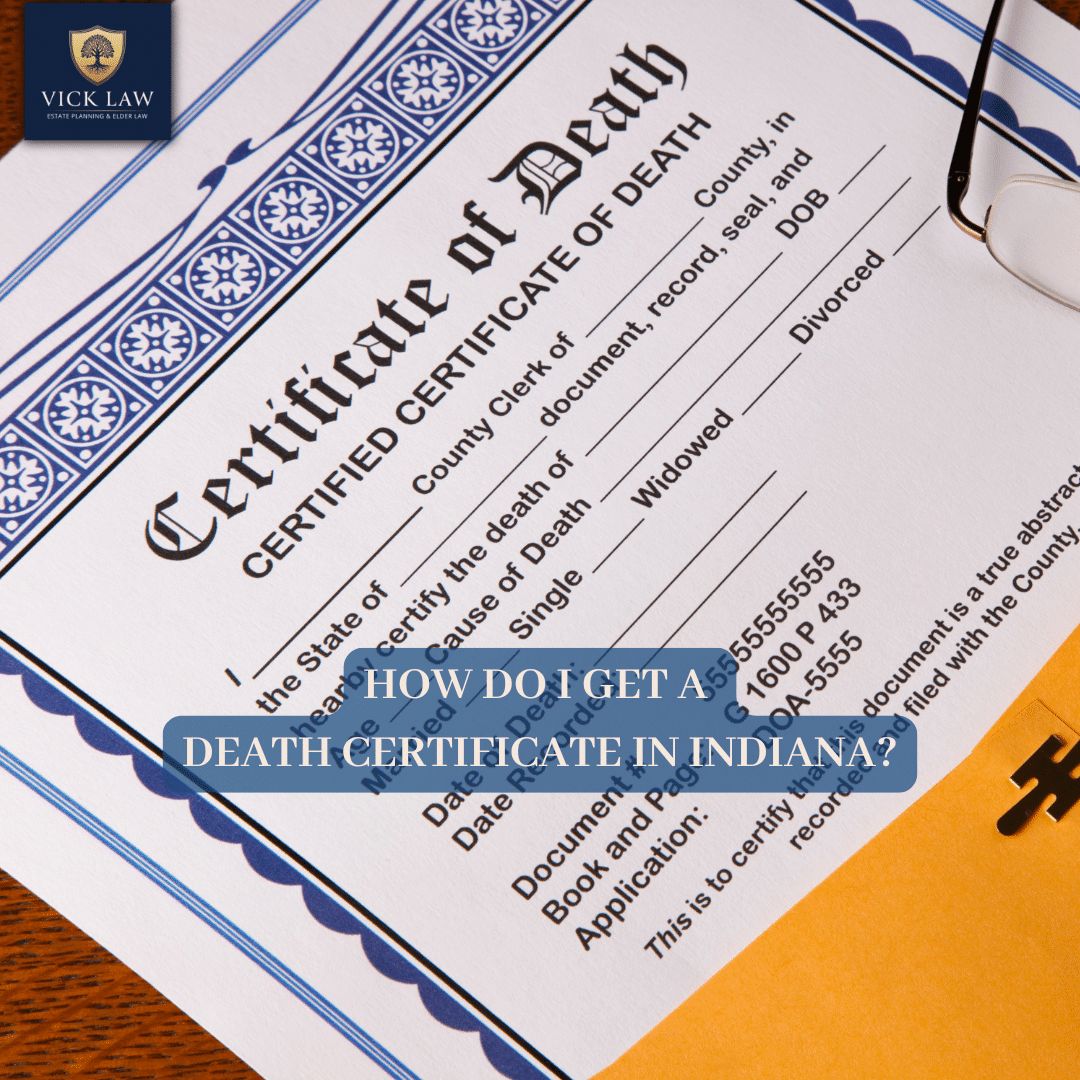
A death certificate is the official record of a person's death. In Indiana, certified copies of death records are issued through the Indiana Department of Health or the local health department in the county where the death occurred. When a bank, insurance company, court, or other institution asks for a death certificate, it will often want a certified copy, not a photocopy or picture of the original.
Before sending anything, ask the institution whether it requires a certified copy and whether that copy will be returned to you. Some organizations may only need to review or make a copy of the certificate, while others may keep the certified copy you provide. Knowing that ahead of time can help you determine how many copies you actually need.
Why Would You Need a Death Certificate?
A death certificate helps establish that the person has died so that financial, legal, and administrative matters can move forward. Exactly where one will be required depends on the person's estate and the assets they owned.
You may be asked for a certified death certificate when dealing with matters such as:
- Life insurance claims
- Bank or investment accounts
- Retirement accounts
- Real estate
- Vehicles
- Certain beneficiary claims
- Probate or estate administration
- Financial institutions holding the deceased person's property
Not every organization will handle death certificates the same way. Before mailing an original certified copy, ask exactly what the institution needs. This can save both time and money.
How Many Death Certificates Should You Order?
This is one of the most practical questions families ask. There isn't one number that works for every estate. Someone with a home, several financial accounts, life insurance, retirement benefits, and other individually owned property may need more certified copies than someone whose affairs are relatively simple. Indiana itself has previously advised families that several copies may be needed depending on the number of accounts and matters that must be addressed after death.
Instead of guessing, make a quick list of the organizations you expect to contact. Determine which ones actually require a certified copy and whether they will return it. It may also make sense to ask the funeral home how many copies they recommend based on your circumstances. Ordering enough copies early can save you from having to stop the estate administration process later while waiting for another one. At the same time, you don't necessarily need to order twenty copies simply because someone told you that's what everyone should do.
Who Can Get a Death Certificate in Indiana?
Indiana death certificates aren't simply available to anyone who asks for one. The Indiana Department of Health requires a person requesting a certified death certificate to demonstrate a qualifying relationship or other direct interest and provide appropriate identification.
Eligible applicants can include certain family members and others who can establish the required legal or financial interest. Indiana's current guidance includes relationships such as a spouse, parent, adult child or grandchild, adult sibling, grandparent, and certain other qualifying relatives. Attorneys, legal guardians, government agencies, and others may also qualify when the appropriate requirements are satisfied.
The documentation required depends on why you are entitled to the record. This is important if you're helping settle an estate but aren't an immediate family member. Don't assume that simply knowing the deceased person or helping the family will allow you to order a certified copy.
How Do You Order a Death Certificate in Indiana?
There are several ways to obtain a certified Indiana death certificate. The Indiana Department of Health allows eligible individuals to request death records through the state by mail, online, or by phone. The price is only 8 dollars the first certificate and 4 for every additional copy. The state uses VitalChek as its authorized online ordering provider, nother option that may be better if you're trying to obtain the certificate more quickly.
Indiana recommends contacting the local health department in the county where the death occurred for faster service.
If your mother lived in Greenwood but died at a hospital in Indianapolis, for example, you would want to pay attention to where the death occurred, not simply where she lived. Local health departments may offer walk-in services, but their hours and procedures vary. It is worth calling or checking the county health department's current instructions before making the trip. The Indiana Department of Health itself does not currently provide walk-in service for vital records.
Don't wait until you're halfway through the request to start gathering information. Indiana currently asks for information about the deceased person, including the person's name, date of death, place of death, and date of birth. You will also need to establish your identity and your relationship or direct interest in the record. Depending on your relationship to the person who died, additional documentation may be required.
If you are unsure whether you qualify to order the certificate or what documents you need, check the Indiana Department of Health requirements before submitting the request. An incomplete request can create another delay at a time when you may already be waiting to handle estate matters.
How Long Does It Take to Get a Death Certificate in Indiana?
This is where planning ahead matters. Processing time can depend significantly on where and how you order the certificate. The Indiana Department of Health specifically recommends ordering through the local health department where the death occurred when faster service is needed. State processing times can be considerably longer, and the state notes that processing times can vary. That means if you're waiting for a death certificate before you can handle an insurance claim, financial account, or another estate matter, don't assume you'll receive one from the state within a few days.
If the death was recent, the funeral home may also be able to explain how the initial certified copies are being obtained and when the family should expect them. If you need additional copies later, contacting the appropriate local health department may be a good place to start.
What Does a Death Certificate Allow You to Do?
This is another area where families can become confused. Having someone's death certificate doesn't automatically give you authority to manage that person's estate. It proves the death. It doesn't necessarily prove that you have the legal authority to act. For example, being someone's child and having a certified death certificate doesn't automatically allow you to withdraw money from the deceased person's individual bank account.
Likewise, being named executor in a will doesn't always mean you can immediately walk into a bank and take control of estate assets. Depending on the circumstances, probate may be necessary, and the person named in the will may need to be formally appointed as the personal representative of the estate. Other assets may pass outside probate through beneficiary designations, joint ownership, trusts, or other arrangements.
The death certificate is often an important piece of the process, but it is only one piece.
What Should You Do With the Death Certificates Once You Have Them?
Keep them somewhere secure and accessible to the person handling the estate. It can also help to keep a simple record of where certified copies have been sent. For example, if you start with eight certified copies and send one to an insurance company and another to a financial institution, write it down. Note whether the institution plans to return the certificate. Although this sounds like a small organizational step, after a few months into administering an estate, when you've spoken with banks, insurance companies, attorneys, government agencies, and family members, you may be very glad you kept track.
TIP: You should also avoid mailing your last certified copy unless you know whether it will be returned.
What If the Person Died Outside Indiana?
Indiana can issue death certificates for deaths that occurred in Indiana. If your loved one was an Indiana resident but died in another state, the death certificate generally needs to be obtained from the vital records authority in the state where the death occurred. If your father lived in Greenwood but died while spending the winter in Florida, you wouldn't request his death certificate from Indiana simply because Indiana was his permanent home. Where the death occurred determines which state's vital records system maintains the death record.
Do You Need a Lawyer to Get a Death Certificate?
Usually, obtaining the certificate itself doesn't require hiring an attorney. The harder questions often begin after you have it.
-Who has authority to handle the estate?
-Does probate need to be opened?
-What happens to the house?
-How are creditors handled?
-Which assets pass through the estate and which pass directly to beneficiaries?
-What happens if the person received Medicaid?
-What if there is no will?
Those questions aren't answered by the death certificate. If you are responsible for handling someone's affairs after death and aren't sure what to do next, that is often a good time to speak with an estate or probate attorney.
How Vick Law Can Help After a Loved One Dies
Losing someone is difficult enough without feeling as though you are supposed to suddenly understand probate, bank procedures, beneficiary designations, creditor rules, and estate administration. Sometimes the first question we hear is very simple:
“My parent died. What do I do now?”
We can start there. Vick Law helps families in Greenwood, Center Grove, and surrounding communities understand the steps that may need to be taken after a death. Depending on the circumstances, that may include determining whether probate is necessary, understanding who has authority to act, identifying estate assets, addressing creditor and Medicaid Estate Recovery issues when applicable, working through real estate questions, and helping the personal representative administer the estate.
You don't need to have every document organized before asking for help. If you've lost a loved one and aren't sure what comes next, contact Vick Law to schedule a consultation.
Vick Law, P.C.
3209 W. Smith Valley Rd., Suite 113
Greenwood, IN 46142
(317) 884-3133
This article is provided for general educational purposes only. Vital records procedures and estate administration requirements can change and may depend on individual circumstances. This information is not legal advice and does not create an attorney-client relationship.
Reference
Indiana Department of Health, Division of Vital Records
Indiana's official Vital Records guidance provides current information about obtaining certified death certificates, eligibility and identification requirements, ordering methods, fees, and processing.